PSP Setup
Beyond a Single MID: Scaling Payments for a Subscription Supplement Brand
Company
Solene Wellness
Product
Subscription Supplements
Stage
Proactive, Pre-Shutdown
Processor
Described structurally — not named
Problem
The merchant runs a women’s health supplement brand on a subscription model. Both supplements and recurring billing receive additional scrutiny during underwriting. Supplements are considered a high-risk category, while recurring payments carry greater chargeback exposure because some customers dispute renewals rather than canceling directly.
The company’s public review profile created another concern. Underwriters use customer reviews to assess service quality and the likelihood of future disputes, so the poor rating weakened the business before the rest of its profile was reviewed.
The business first needed to improve its risk profile and become ready for underwriting. From there, one processing account would not be enough: the initial MID carried a $200,000 monthly limit, and the company needed more capacity to continue growing. Its stored payment data also remained inside Shopify, leaving the subscription business dependent on a single platform and processing relationship.
Approach
We strengthened the business for underwriting, then built a multi-processor setup that could support its subscription volume.
Prepared the website for underwriting
We reviewed the website and updated the compliance language, policies, and marketing claims that could raise concerns during underwriting. The goal was to present the business clearly while aligning the site with processor expectations for a subscription supplement brand.
Improved the public review profile
The company introduced a consistent process for asking customers to share feedback. This allowed the public profile to reflect a broader range of customer experiences instead of being shaped primarily by customers with unresolved complaints.
Strengthened subscription support
The merchant put a customer support team in place with the authority to cancel subscriptions and issue refunds when requested. Giving customers a clear way to resolve billing issues directly helps prevent avoidable disputes and chargebacks.
Sourced processors and moved the checkout
Once the business was ready for underwriting, Compaytence sourced processing accounts and connected them through a third-party checkout. Stored payment data now sits within the checkout layer rather than exclusively inside Shopify, with a payment router directing transactions across the processor portfolio.
Solution
Approved for a MID with a $200,000 monthly processing limit.
Additional MIDs in progress to support higher volume.
Processing moved away from sole reliance on Shopify Payments.
Stored payment data moved to a third-party checkout.
A payment router added to distribute transactions across the processor portfolio.
By addressing the risks before a shutdown occurred, the merchant entered underwriting with a stronger business and a payment setup designed to support continued growth.
Proof
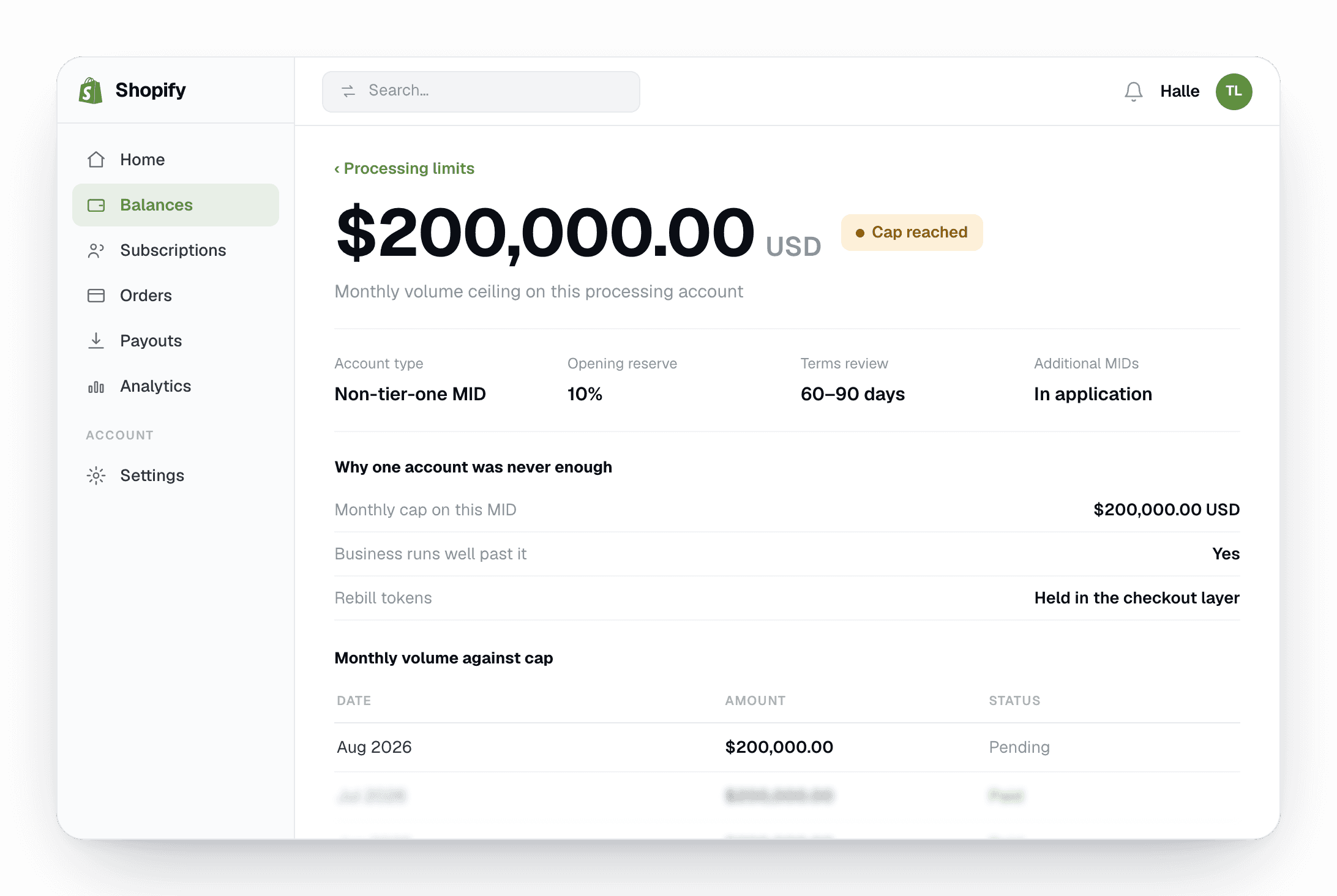
One MID, capped at $200,000 a month — below what the business runs
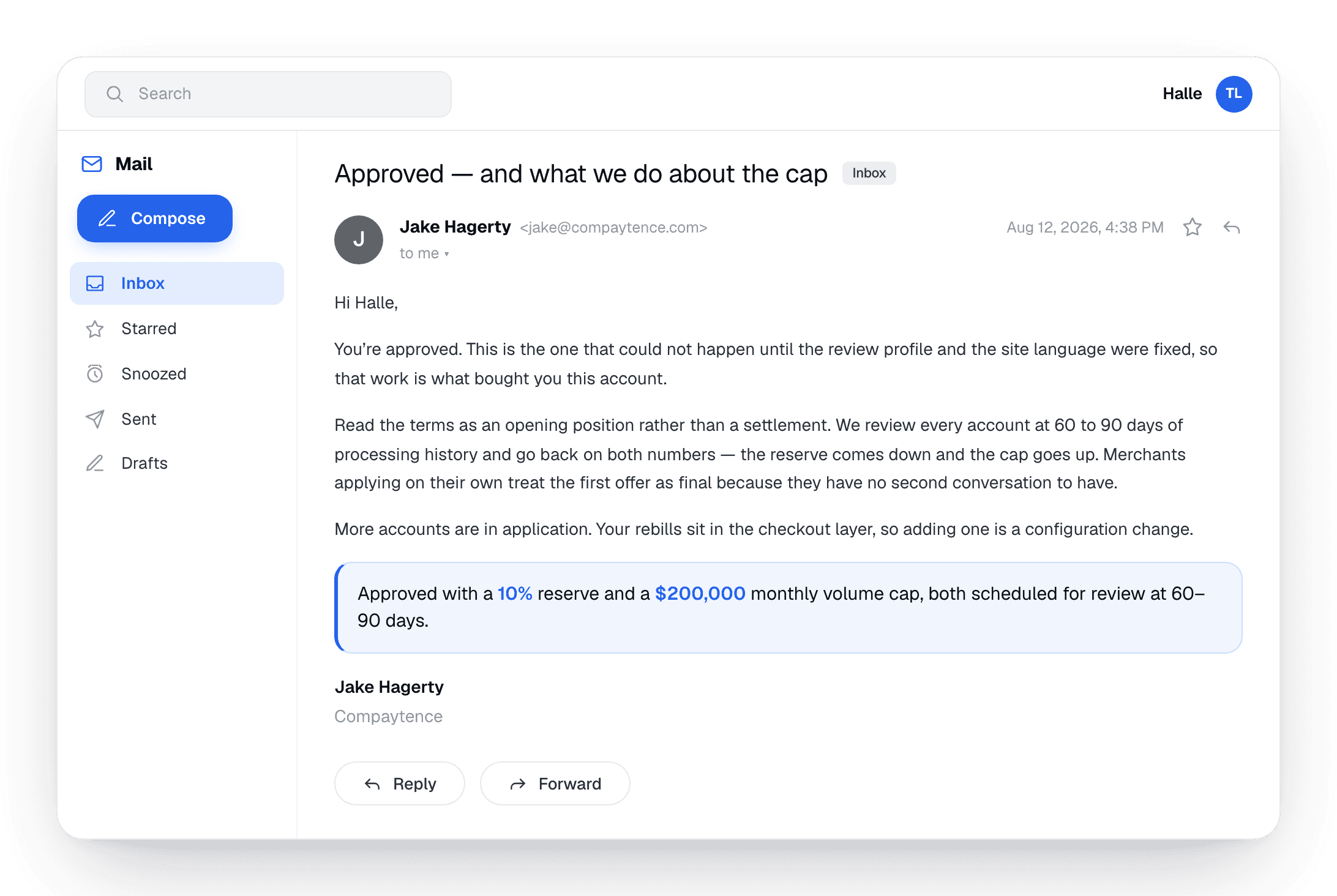
Approved at a 10% reserve and a $200,000 cap, both up for review at 60–90 days
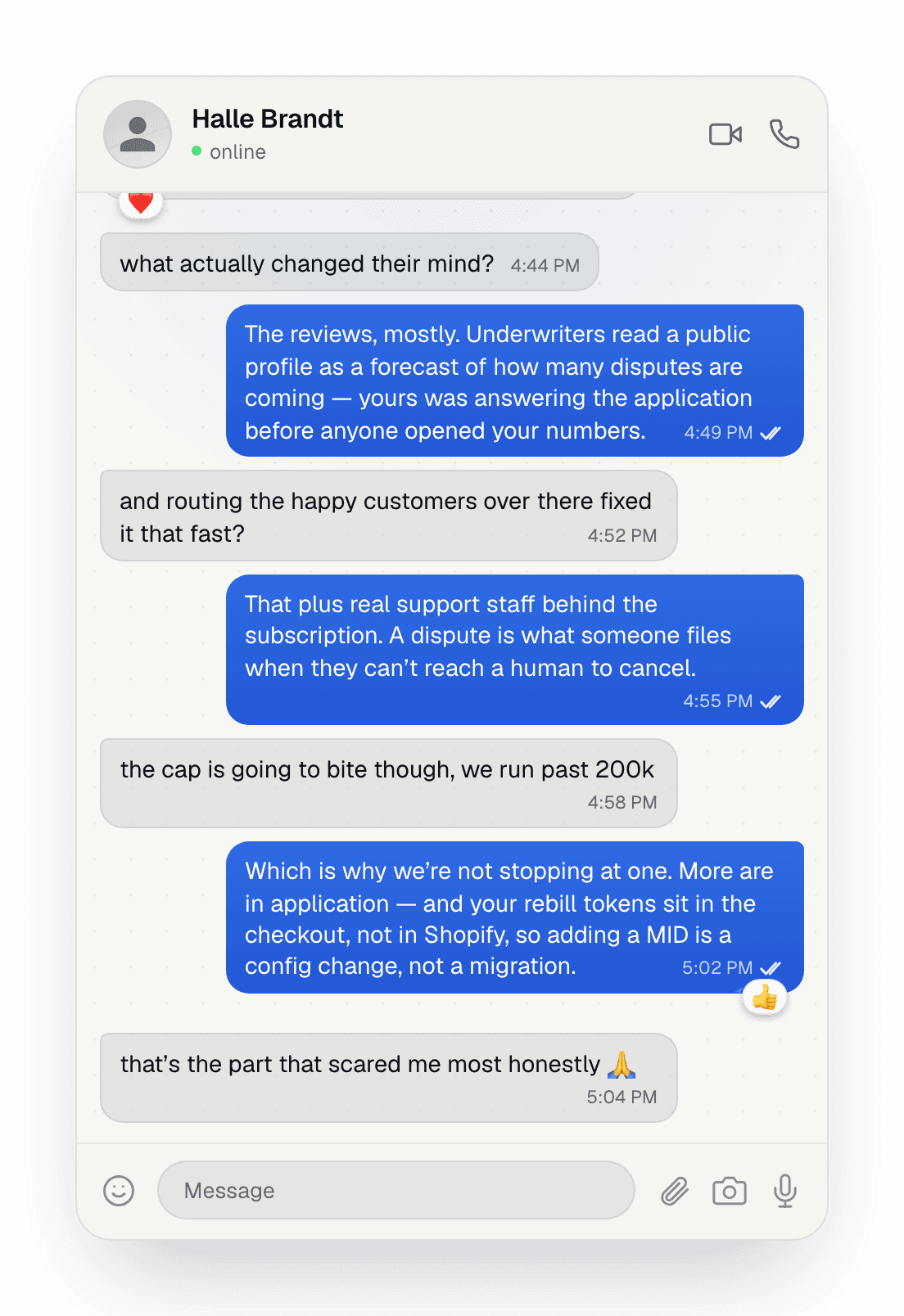
The review profile and site language were what got the approval