
A Letter That Revealed the Future
Amazon and Perplexity collided last week in a moment that felt like the future of commerce arriving ahead of schedule. The tension began with a letter: Amazon sent a formal demand to Perplexity AI insisting that its Comet browser agent stop shopping on Amazon’s site without revealing that it was an automated system. Perplexity had built a feature that allows users to ask the agent to buy something—cat food, a charger, a new bottle of shampoo—and the bot would navigate Amazon and complete the purchase on their behalf. To Amazon, this was an automated buyer disguised as a human user. To Perplexity, Amazon’s objection amounted to interference with user choice. The exchange escalated quickly, with Perplexity accusing Amazon of intimidation and Amazon insisting that any entity transacting on its platform should disclose its identity. Beneath the legal positioning sits a more profound shift in how commerce is starting to unfold.
The Disappearing Customer Journey
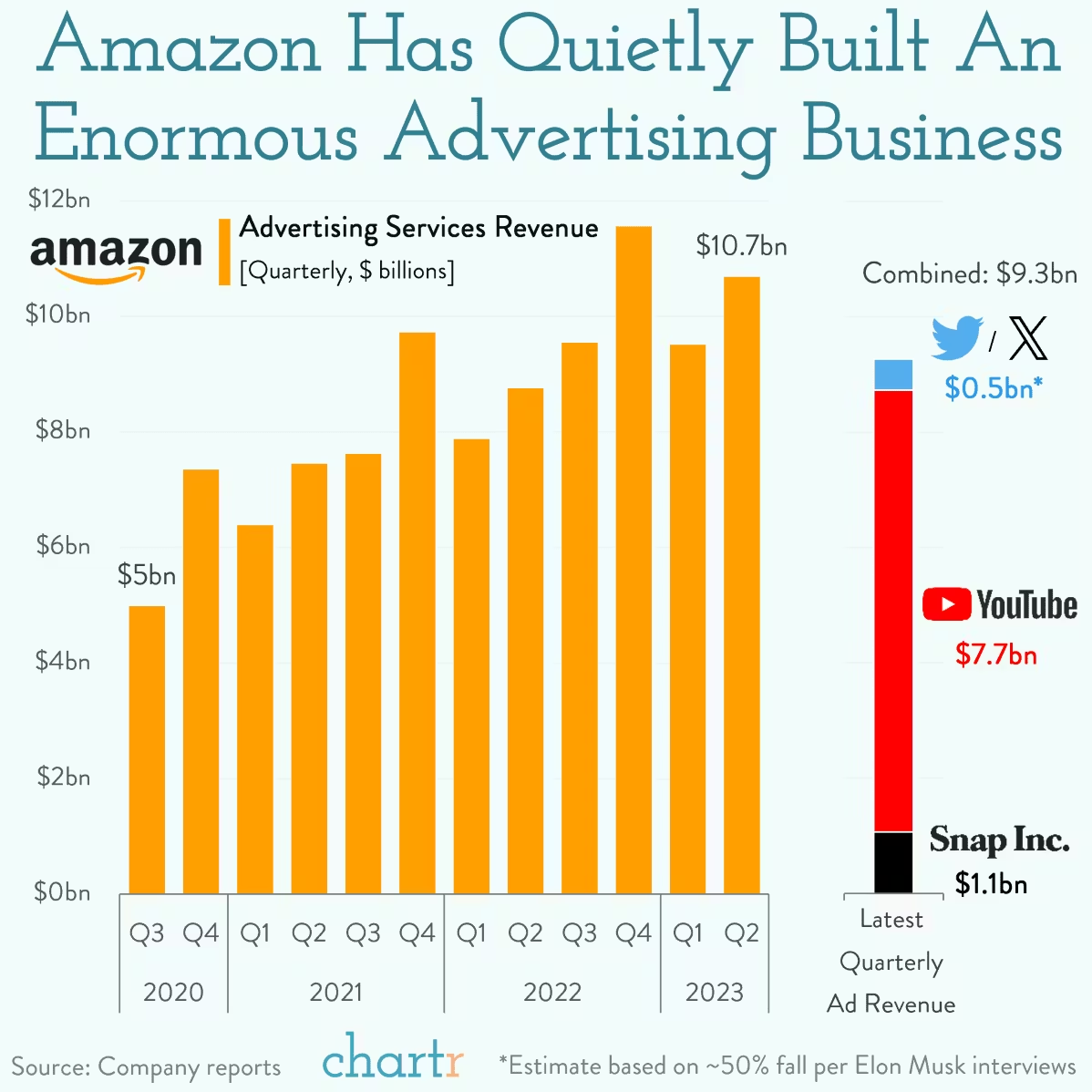
Commerce on the internet has relied for decades on a predictable pattern: a human arrives, searches, scrolls, compares, sees promotions, interacts with recommendations, and eventually buys. Amazon perfected the art of turning this journey into revenue through sponsored placements, Prime prompts, cross-sells, and loyalty touchpoints woven throughout every page. The margins of e-commerce have long depended on these small nudges layered across billions of sessions. When an AI agent appears, the pattern dissolves. The bot already understands what the user wants. It arrives with intent, executes the task, and leaves immediately. Browsing vanishes. Recommendations lose their stage. Advertising impressions shrink to near zero. Prime never has a chance to make its pitch. Amazon’s letter, which complained of a “significantly degraded” shopping experience, signaled the deeper concern: the infrastructure built around human attention becomes harder to sustain when attention no longer enters the store.

What Merchants Lose When Bots Buy
Merchants are beginning to confront the implications of shoppers who never hesitate or explore. Upselling depends on moments of uncertainty—micro-pauses where someone wonders whether they need the upgraded model or the extended warranty. Agents don’t linger in that way. They interpret a request, narrow the options, and finalize the purchase with a level of focus that shuts out suggestion. The long-standing pattern where a shopper arrives intending to buy one thing and leaves with two becomes unstable when the buyer is a software agent. Advertising faces a similar challenge. Human customers can be influenced by promotions or visual prompts; agents respond only to the instructions they were given. Their world narrows to intention and fulfillment, leaving merchants with fewer opportunities to shape the decision or collect behavioral data that once fueled targeting and personalization. As these transactions multiply, merchants may need to reimagine how discovery and persuasion function when the intermediary is a machine.
Payments at a Crossroads
The payments stack now sits in the direct path of this transition. If an agent initiates a transaction, platforms must determine how to authenticate its authority and understand the relationship between the bot, the user, and the merchant. Amazon’s demand that Perplexity disclose its agent identity hints at the beginning of a new transactional grammar. Payment networks may need to include metadata that distinguishes agent-initiated sessions from human-initiated ones, along with information about authorization, oversight, and origin. Fraud detection systems trained on human patterns will need to adapt to machine-driven purchasing rhythms. Questions of liability become more complex—if an agent misinterprets a request, purchases an incorrect item, or repeats an order unnecessarily, responsibility must be assigned. As agent-based commerce grows, merchants may even design dedicated checkout paths where agents can transact with clear permissions and predictable structures that reduce errors and enhance trust.
A New Kind of Loyalty
Customer relationships begin to shift when the buyer delegates every interaction to a bot. Loyalty programs thrive on narrative—points earned, perks unlocked, preferences learned over time. That emotional thread weakens when the agent handles the touchpoints and the human sees only the result. Some merchants may try to build relationships directly with the agents, offering incentives or integrations that encourage them to choose one store over another. Others may negotiate with the agent providers themselves, seeking placement within the discovery pipelines that feed AI-driven recommendations. This dynamic echoes earlier moments in digital commerce when search engines and marketplaces became gatekeepers to customer intent. The difference now is that the interface is conversational and the shopping experience occurs far upstream, leaving merchants with limited opportunities to shape the journey once the agent takes over.
The Next Phase of Online Commerce
The debate between Amazon and Perplexity reads as a legal disagreement, but the deeper story is about a commercial model meeting a new kind of customer. Many of the structures that shaped the digital economy—ad impressions, recommendation surfaces, checkout optimizations, loyalty ladders—were designed for human reasoning and exploration. AI agents move through these systems with a different logic, one defined by speed, precision, and an emphasis on task completion. Their rise forces merchants, advertisers, and payment networks to rethink how value is created and captured. Some companies will resist the shift by tightening access; others will adapt and build new frameworks that treat agents as a legitimate class of customer with their own pathways, incentives, and rules of engagement. The first hints of this world arrived in the form of a single AI shopper stepping onto Amazon’s platform, and the force of the pushback suggests how much is at stake as commerce reorganizes around new kinds of intermediaries.