
The Annual Reset: How Consumers Rethink Subscriptions in January

Every year, come January, the subscription economy reveals itself.
Usually in the space between holiday credit card statements and New Year’s resolutions, consumers open their banking apps, scroll through recurring charges, and begin trimming. Streaming services, fitness apps, productivity tools, meal kits, memberships– anything that auto-renews without demanding attention is a prime candidate for removal.
This annual ritual has become so common it now resembles a seasonal event. And the data suggests it’s no longer driven by impulse, but by strategy.
According to CNET’s latest subscription survey, Americans spend roughly $1,080 per year on subscriptions, with nearly $205 of that going to services they rarely or never use. More than 60% of respondents say economic pressure has forced them to reconsider at least one subscription, and one in four had already canceled a paid service before the year ended.
This is the modern subscription economy in motion: one that abandons loyalty.
The Subscription Economy’s New Rhythm
Following the seasonal rhythm, December is the month of cancellation. January is the month of reallocation.

In December, consumers attempt to eliminate their recurring expenses. Anything that feels passive or forgotten—an extra streaming service added for one show, a premium app tier used briefly, a gym membership that slipped into aspirational territory– gets reviewed. The process is rarely smooth. Even now, canceling often involves password resets, chatbot loops, and friction designed to delay the exit.
Regulators have noticed. The Federal Trade Commission finalized a “click-to-cancel” rule in late 2024 intended to make cancellations as simple as sign-ups. While a U.S. appeals court blocked enforcement in 2025, the intent suggests consumer patience with subscription management is wearing thin.
Yet cancellations are rarely permanent.
Data from Antenna and Business Insider shows that resubscription has become a core behavior. Roughly 61% of Netflix users who canceled returned within a year, reinforcing a new norm across digital services: leave when you want, return when something compelling appears.
The subscription economy has quietly rewritten its social contract. Commitment has been replaced by flexibility.
From Canceling to Reinvesting: The Resolution Economy
What happens to the money consumers save by canceling subscriptions?
January provides the answer.
Behavioral economists describe the “fresh start effect” as a phenomenon where temporal landmarks– New Year’s Day, birthdays, life transitions– motivate aspirational behavior. In commerce, this translates into renewed spending.
Gift cards act as the bridge. Research from Cardlytics shows that consumers spend about 40% more than a gift card’s value when redeeming, while Capital One Shopping found 61% of shoppers exceed the card’s balance. Retailers lean into this dynamic by framing gift cards as permission to indulge– positioning January purchases as intentional, deserved, and aligned with self-improvement.
Fitness spending follows the same pattern. Transaction data indicates traditional gyms still capture the largest share of fitness spend, but digital and on-demand fitness subscriptions are growing faster. Notably, Cardlytics found that roughly half of consumers who start paying for an on-demand fitness service in January are still subscribed nine months later, while physical gyms lose most new members during the same period.
Travel rounds out the cycle. January is also the booking season. Reuters reported that cruise operators like Royal Caribbean saw a record start to Wave season, with steady demand at higher prices. Consumers don’t stop spending after the holidays– they redirect spending toward experiences and narratives that feel restorative.
Why Churn Is No Longer the Enemy
For merchants operating in the subscription economy, churn is often framed as a problem to eliminate. That mindset is quickly becoming outdated.
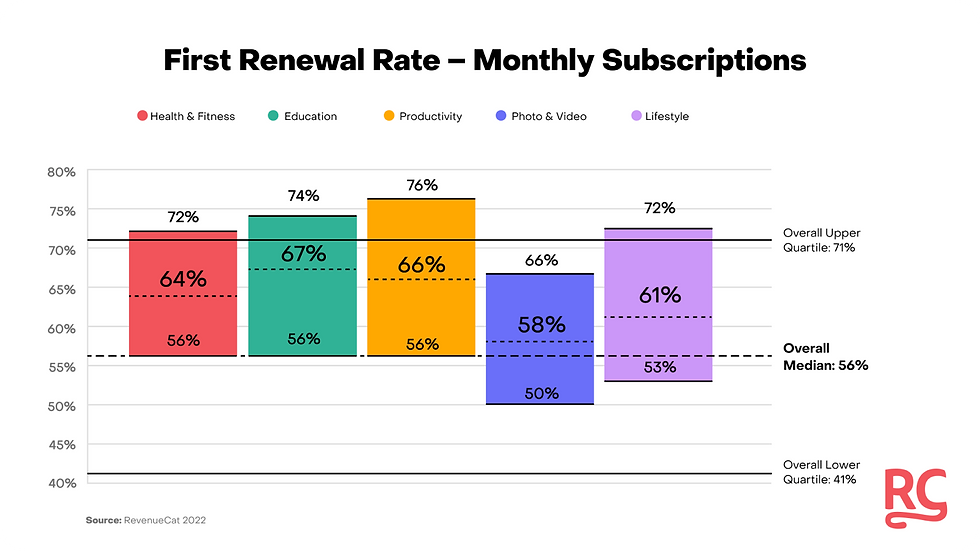
For the modern consumer, subscriptions are not permanent contracts. Services are easily toggled on and off based on relevance, value, and timing. Platforms that acknowledge this reality perform better over time than those that fight it.
This is visible across streaming, SaaS, fitness, and digital services. Easy cancellation does not reduce lifetime value when paired with strong reactivation strategies. It increases trust. It reduces friction. It keeps brands top of mind when the next “fresh start” moment arrives.
As one Antenna analyst noted in recent subscription research, “The goal is no longer to prevent cancellations at all costs. It’s to make returning frictionless.”
That insight carries real operational implications. Transparent pricing, clear billing cycles, pause options, and clean offboarding flows now function as acquisition tools as much as retention mechanisms.
Subscription management itself has become a product category– proof that consumers value control as much as content.
What Merchants Should Take Away
For merchants and platforms building in the subscription economy, the message is: design for the full life cycle.
Consumers are signaling exactly what they want:
Easy sign-up
Easy cancellation
Flexible pauses
Clear value exchange
A reason to come back
Brands that win in this environment do not aim to trap customers.
The resolution economy rewards merchants that align recurring payments with intentionality rather than inertia. January spending proves that consumers are willing to recommit when a product fits the story they are telling themselves about the year ahead.
The unsubscribe rates may feel brutal in December, but they are not a total rejection of subscriptions.
And in a world where spending is increasingly deliberate, the merchants that thrive will be the ones who respect that choice– and make reentry feel just as effortless as exit.


Comments