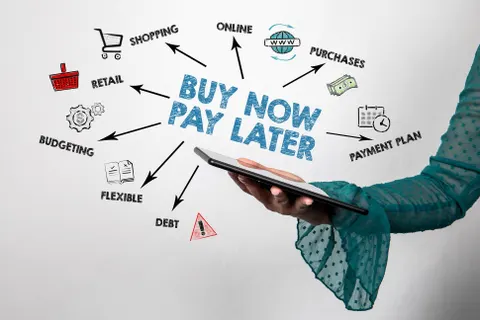
BNPL Becomes a Holiday Default
The holiday season has long served as a stress test for consumer finances. Each year, it reveals how confident shoppers feel, how much elasticity remains in household budgets, and how willing people are to stretch spending in pursuit of tradition, convenience, or celebration. In 2025, that stress test is producing a clear signal: buy now, pay later has become a central mechanism through which consumers are navigating affordability at checkout.
Across U.S. retail, BNPL usage is no longer confined to edge cases or high-ticket purchases. From Nov. 1 to Dec. 1, BNPL spending reached $10.1 billion, up 9% year over year, according to Adobe Analytics. That growth exceeded the pace of overall holiday spending during the same period, an important distinction. It suggests that while consumers are still spending, they are increasingly relying on installment-based payments to do so. Adobe expects BNPL volume to surpass $20 billion across November and December, reinforcing the idea that pay-over-time has become embedded in seasonal shopping behavior rather than used opportunistically.
The reason for this adoption is not hard to trace. BNPL sits at the exact intersection of convenience and constraint. It removes friction at the moment of purchase, allowing consumers to commit without confronting the full financial impact upfront. For households still contending with elevated prices, rent pressure, and uneven wage growth, installment payments feel less like borrowing and more like financial planning.
Consumer data reflects this mindset. PayPal’s 2025 holiday survey found that half of U.S. shoppers plan to use BNPL, with adoption concentrated among Gen Z and Millennials. For these cohorts, BNPL increasingly functions as a budgeting tool rather than a fallback option. It allows them to smooth cash flow, preserve liquidity, and manage uncertainty during high-spend periods like the holidays.
For merchants, this shift has practical consequences. BNPL is no longer a differentiator used to attract a narrow segment of shoppers. It is becoming part of the expected payment stack, especially for brands serving younger demographics or selling discretionary, gift-driven products. As consumer expectations evolve, checkout flexibility is increasingly viewed as a baseline feature rather than a premium add-on.

Growth Numbers and Growing Strain
The scale of BNPL adoption is most visible in provider performance. Klarna reported a 45% increase in spending volume from Nov. 1 through Black Friday compared with the same period last year, describing the start of the holiday season as record-setting. Block said transactions across its ecosystem rose 10% from Black Friday through Cyber Monday, with average BNPL spending per customer also increasing. These figures align with what merchants are seeing on the ground: higher conversion rates when installment options are visible and accessible at checkout.
Yet this growth is unfolding against a more fragile consumer financial backdrop. U.S. household debt surpassed $18 trillion in 2025, reaching record levels as consumers juggle credit cards, auto loans, student debt, and rising living costs. BNPL does not replace these obligations; it layers on top of them. Each BNPL purchase functions as a separate loan, often issued by different providers, each with its own repayment cadence.
This fragmentation creates a subtle but meaningful risk. During the purchase, BNPL feels manageable. After the purchase, those obligations begin to surface simultaneously. Payments are drafted automatically, sometimes with little visibility until balances decline or accounts overdraft. For consumers managing multiple BNPL plans across different merchants, keeping track becomes difficult only after the holiday rush has passed.
This dynamic has drawn attention from consumer advocates and regulators alike. State attorneys general have sent formal inquiries to leading BNPL providers this season, seeking clarity on loan structures, fee practices, and dispute resolution protocols. Their concern is not limited to fraud or misuse; it centers on whether consumers fully understand the cumulative impact of stacking installment loans during periods of financial stress.
Missed payments can carry real consequences. While many BNPL products advertise interest-free installments when paid on time, extended plans or delinquent accounts can introduce late fees or APRs that rival traditional credit products. As BNPL adoption widens, these outcomes are becoming more visible, fueling debate around consumer protection and transparency.
For merchants, this environment presents a delicate balance. BNPL clearly supports revenue growth and demand capture, but it also amplifies downstream risk. When customers feel overwhelmed by repayment schedules or surprised by fees, frustration often surfaces in the form of refunds, disputes, or negative brand sentiment. Even when a third-party lender owns the financing, the merchant experience frames the transaction in the consumer’s mind.

Why BNPL Still Matters for Merchants
Despite the growing scrutiny, BNPL remains one of the most effective tools merchants can deploy in a constrained economy. Installment payments continue to drive higher conversion rates, larger average order values, and lower cart abandonment—outcomes we’ve consistently observed across our coverage of Klarna, Affirm, and other BNPL providers. Shoppers who are uncertain about affordability are more likely to complete purchases when flexible payment options are available.
What has changed is the level of responsibility that comes with offering those options. BNPL is no longer a plug-and-play growth lever. It is part of the broader customer experience, and its success depends heavily on how well merchants execute the fundamentals around it.
Clear communication matters more when customers are paying over time. Shipping delays feel more frustrating when payments have already begun. Refunds feel more urgent when installment schedules are active. Customer support becomes more critical when shoppers are managing multiple obligations and need clarity quickly. Merchants that underestimate these dynamics often find that BNPL-driven growth is offset by increased post-purchase friction.
Our prior reporting on Klarna illustrates this tension well. As BNPL providers scale, service quality, dispute handling, and operational discipline become decisive factors in maintaining trust. The same principle applies at the merchant level. The more flexible the payment, the higher the expectation that everything else—from fulfillment to support—will function smoothly.
This holiday season makes one thing clear: BNPL is becoming a standard part of the U.S. checkout experience, particularly for younger consumers who are shaping future spending patterns. Economic pressures are unlikely to ease quickly, and shoppers will continue seeking tools that help them manage uncertainty without sacrificing participation in commerce.
For merchants, the path forward is not about choosing between growth and responsibility. It is about aligning the two. Offering BNPL meets customers where they are today. Pairing it with strong operational fundamentals ensures that flexibility builds loyalty rather than resentment.
As installment payments continue their transition from alternative financing to everyday expectation, merchants who invest in clarity, support, and discipline will be best positioned to benefit. This holiday season shows that BNPL is reshaping not just how consumers pay, but how trust is earned and maintained at checkout.