
Big Tech has spent years exploring crypto cautiously, testing ideas without reshaping its core systems. Last week, YouTube made a meaningful move in that direction by quietly adding a new payout option inside one of the largest creator economies in the world. U.S.-based creators on the platform can now choose to receive earnings in PayPal’s U.S. dollar–backed stablecoin, PYUSD.
YouTube has distributed more than $100 billion to creators over the past four years, placing it among the largest recurring payout engines anywhere on the internet.Introducing a stablecoin into that flow redefines how major platforms approach settlement speed, flexibility, and global reach—without restructuring their business models or assuming new balance-sheet risk.
PayPal’s head of crypto, May Zabaneh, confirmed the arrangement, explaining that the stablecoin option runs entirely through PayPal’s existing payouts infrastructure. YouTube already relies on that infrastructure to compensate creators, which allows the platform to offer a new payout method without handling digital assets directly.

As Zabaneh explained, “The beauty of what we’ve built is that YouTube doesn’t have to touch crypto.”That framing matters. The integration reflects a payments-layer evolution rather than a strategic overhaul.
Stablecoins Enter the Creator Economy Through Familiar Workflows
YouTube’s monetization system functions like a massive contractor payout network. Creators earn revenue, YouTube aggregates those earnings, and funds are distributed on a recurring schedule. PayPal’s Hyperwallet infrastructure has long supported this process, managing compliance, disbursement, and regional payment preferences behind the scenes.
The addition of PYUSD changes only the final step. After PayPal introduced stablecoin payouts earlier this year, YouTube elected to surface that option for eligible U.S. creators. Earnings are issued as usual, become available through PayPal, and can then be withdrawn using the creator’s preferred method. PYUSD now appears alongside existing payout choices.
The design keeps complexity contained. Creators who prefer traditional cash-out methods can continue using them. Those who want to hold PYUSD inside PayPal’s custodial environment have that option as well. PayPal also allows supported crypto assets, including PYUSD, to be transferred to external addresses, giving creators a pathway to on-chain settlement if they choose to take it.
Control stays with the user, while the platform maintains a consistent payout experience.
Why This Matters at YouTube’s Scale
The broader significance lies in distribution rather than immediate adoption numbers. YouTube’s payout engine moves an estimated $25 billion per year, and even small opt-in rates can translate into recurring transaction volume. Stablecoins gain relevance through repetition and velocity, particularly in payroll-like payment flows that occur frequently and across a large base of recipients.
Creator payouts fit that profile closely. Even conservative assumptions suggest that a modest share of creators choosing PYUSD could generate meaningful annual flow. More optimistic scenarios point to substantially higher figures. Either way, the introduction of a stablecoin inside a mainstream payout menu alters behavior patterns over time rather than producing a single moment of impact.
This perspective also reframes how to evaluate PYUSD’s role. The token already has a market capitalization near $4 billion, and PayPal has steadily expanded its utility across wallets, merchant payments, and upcoming B2B use cases. Support for additional settlement networks such as Arbitrum has extended its reach further. YouTube’s integration adds a new source of predictable distribution, reinforcing PYUSD’s position as a payments instrument rather than a novelty.
A Broader Pattern Across Big Tech and Payments
Large platforms are increasingly treating stablecoins as a way to improve existing money movement rather than disrupt it. Stripe’s acquisition of Bridge, Google Cloud’s acceptance of PYUSD for certain enterprise payments, and PayPal’s incremental rollout of stablecoin functionality all point in the same direction.
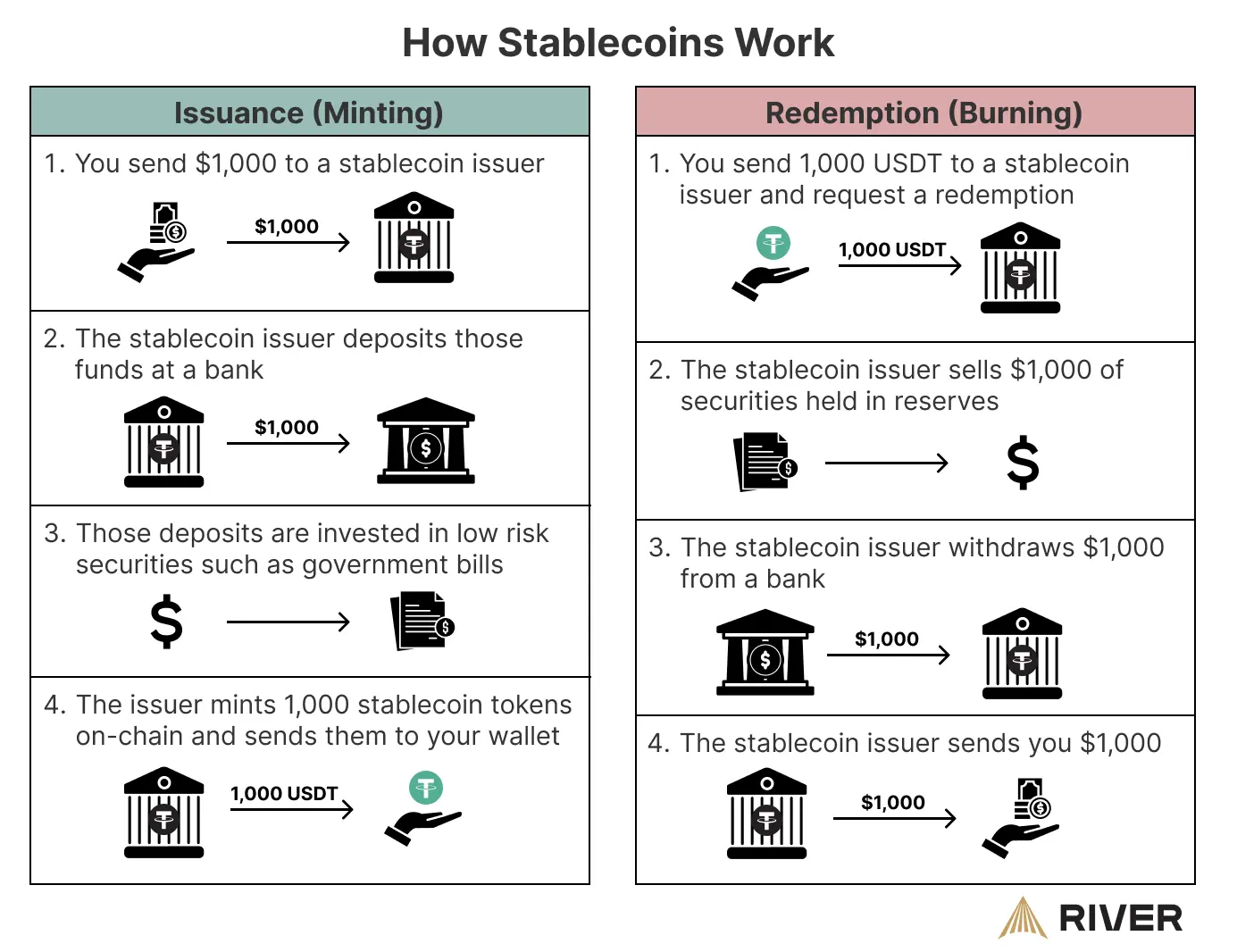
The appeal is practical. Stablecoins offer faster settlement, reduced friction, and simpler cross-border movement. These benefits matter most at scale, particularly for platforms managing millions of small, recurring payments. At the same time, regulatory clarity is improving. Recent U.S. legislation and ongoing work in Congress on payment-stablecoin frameworks have made it easier for enterprise finance teams to map these tools onto established compliance structures.
Citi’s recent Stablecoins 2030 research highlights this shift, projecting steady growth in issuance driven largely by transaction turnover. In that framing, stablecoins function as infrastructure—financial instruments that support settlement activity rather than speculative trading.
That helps explain why YouTube’s integration feels understated. The platform preserves its existing relationships, relies on a regulated payments provider, and expands optionality for creators without altering its core operations.
What Comes Next
For now, the PYUSD payout option applies only to U.S. creators and remains voluntary. YouTube has not shared adoption metrics, and PayPal has positioned the feature as one option among many rather than a centerpiece. That restraint suggests the focus remains on infrastructure rather than promotion.
Still, the implications extend beyond YouTube. If a stablecoin can be added quietly to a $100 billion creator economy without disrupting user experience or platform risk, similar integrations are likely to follow. Marketplaces, gig platforms, and global payout systems face the same pressures around speed, cost, and reach.
In that sense, YouTube’s decision offers a preview of how stablecoins may continue entering the mainstream: through incremental upgrades to existing systems rather than dramatic shifts. The internet’s largest payout engines are adjusting their rails, and creators are being given more control over how their earnings move through the financial system.